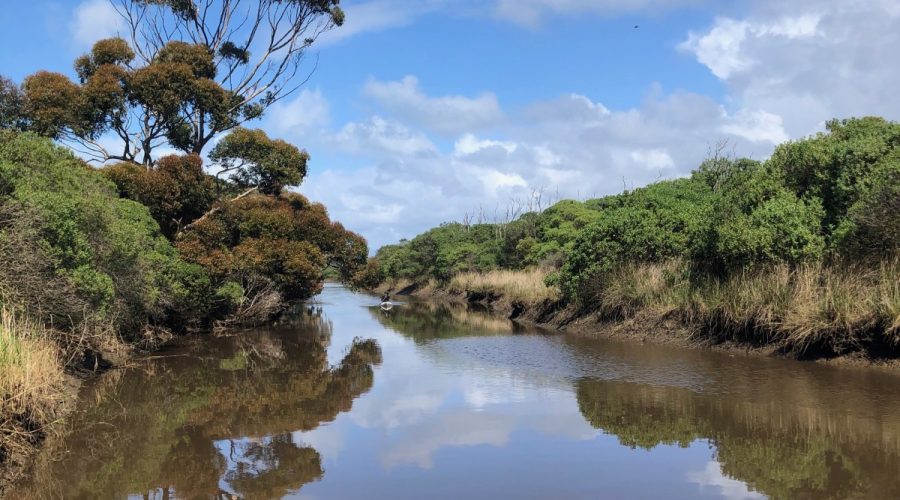
The 2025–26 sampling of the Painkalac Estuary for enterococci that could be damaging to human health has concluded with results that suggest good news for those who swim or recreate on its waters. There are some caveats (see below).
This work was community organised and funded.
This latest round of sampling and testing occurred over two stages, beginning in December 2025.
Stage One
Community volunteers from Swimmable Painkalac (part of the Painkalac Valley Network) collected samples at four sites on the estuary over a period of six weeks. These were taken to ALS in Geelong for analysis of the level of enterococci in the estuary. This testing was funded by the Fairhaven Surf Lifesaving Club. The sampling results were posted (as they were for 2024–25) on the Angair website.
Two estuary samples showed levels of enterococci above the Australian standards considered safe for human recreation.
Stage Two
The sites showing high enterococci were then re-sampled with DNA testing kits from Enviro DNA in Melbourne. Analysis of those tests provides data on the source species for the observed enterococci.
E-DNA testing accommodates three species per test. The Painkalac sampling used testing for human, cow, and dog – a combination selected from the available options as representing the most common sources of faeces deleterious to human health.
This work was funded by Aireys Inlet and District Association (AIDA).
E-DNA analysis requires batches of 10 samples at a time. Four samples were from the two sites with elevated enterococci. It was decided to use the remaining six tests to investigate possible sources of contamination of the estuary from surrounding stormwater run-off. This work could not be carried out until the winter rains had set in.
Samples were taken from the open swale along Bambra road (which collects run off from residential properties which are still un-sewered lots). Samples were also taken from the Allen Noble Sanctuary and the Settling Pond at the lower end of Narani Way. All of those bodies of water currently feed into the Painkalac.
EnviroDNA reported that none of the samples showed any human or cow contamination. Low levels of dog enterococci were detected in the estuary.
Understanding of the human health impacts of dog faeces is not well developed. As a precautionary measure, a public campaign to encourage the collection of dog faeces in the region of the estuary is clearly warranted.
Some caveats on interpreting these results The summer of 2025–26 was dry, so there was little stormwater run-off into the estuary. Two samples did show enterococci above acceptable levels (as previous years of sampling also found). It is likely that the observed pollution came from multiple sources (including dogs) and there are good grounds for concerns about the high population of ducks on the river. At the time of this year’s testing, duck-faeces analysis was not possible, though with the rapid development of this technology, that may change.
One year of this two-stage sampling is certainly insufficient for any confident predictions of the recreational safety of the estuary. Further years of sampling and analysis is important.
The question of what agencies are responsible for testing and analysis of the estuary to ensure that the Australian standards for recreational heath still seems unresolved.
Given the growing worldwide movement for swimmable rivers, we ask all the agencies (Surf Coast Shire, EPA, Barwon Water, GORCAPA, CCMA) to revisit the issue of accountability for future testing of the estuary.
Chris Ryan